
Why Responsible Tourism
It is about providing more rewarding holiday experiences for our guests whilst enabling local communities to enjoy a better quality of life and conserving the natural environment.
Responsible Tourism has three pillars of sustainable development
1. economy
2. society
3. the environment
Tourists themselves want to learn about the host country, reduce environmental impact and meet local people at their visiting Destinations.
Responsible environmental practice has not only benefits by reducing energy, water,and waste, but it also improves the quality of a tourism operation’s surroundings, enhancing the overall experience for the guests.
Local communities are involved in tourism to perceive its benefits for a economic growth and create jobs. Supporting local economic growth is therefore key to long-term success.
Local Product Development
- Provide visits to local places of interest, such as shebeens, restaurants and homes.
- Market local festivals and visits to nearby markets. Offer guests traditional food, cultural events and opportunities to buy locally made arts and crafts.
- Let local craft producers know about the range, size, weight and style of crafts that would be attractive to the visitors. Provide craft suppliers with feedback from clients.
- Reduce environmental impacts when developing tourism.
- Use natural resources sustainably.
- Maintain biodiversity.
- Assist locals to prepare business plans and funding proposals.
- Link local communities and help with skills training and capacity building.
- Help coordinate or fund training programmes to develop local business skills.
- Offer to provide tourism lectures at local schools.
- Invite local school children to visit tourism attractions
- Work with other tourism initiatives, to promote a tourism culture.
- • Negotiate with host communities the notice required for tourist visits, what activities are acceptable and what size groups are suitable. Ask whether it is appropriate for tourists to visit people’s homes.
- Treat cultural heritage with dignity and respect. Inform guests about local customs and traditions and appropriate behaviour. Ensure that tourists ask permission to take photographs or to videotape people.
- Ensure that clients do not damage or remove religious or cultural artefacts.
Fauna and Flora Conservation
- Support a local wildlife or nature conservation programme by providing funds.
- Buy crafts that are sustainably produced and avoid curios or furniture made of indigenous hardwoods.
- Be responsible in the use of wood for fires e.g. use wood from bush-clearing operations.
Sound waste management and water treatment create a safer environment for staff and local communities, reducing illness and disease and enhancing quality of life. Moreover, good environmental practice translates into direct cost savings by reducing energy and waste disposal costs. In terms of the bottom line, good environmental practice makes perfect economic sense.
Tourism establishments that fail to protect their environmental surroundings impact on the very attractions on which most depend for success – clean air, safe water and beautiful surroundings.
Nature-based tourism operations have a particular responsibility towards their natural nvironment in terms of ensuring ecologically sensitive land and habitat management and conserving biodiversity.
Eco-Tourism in the Lungs of the World
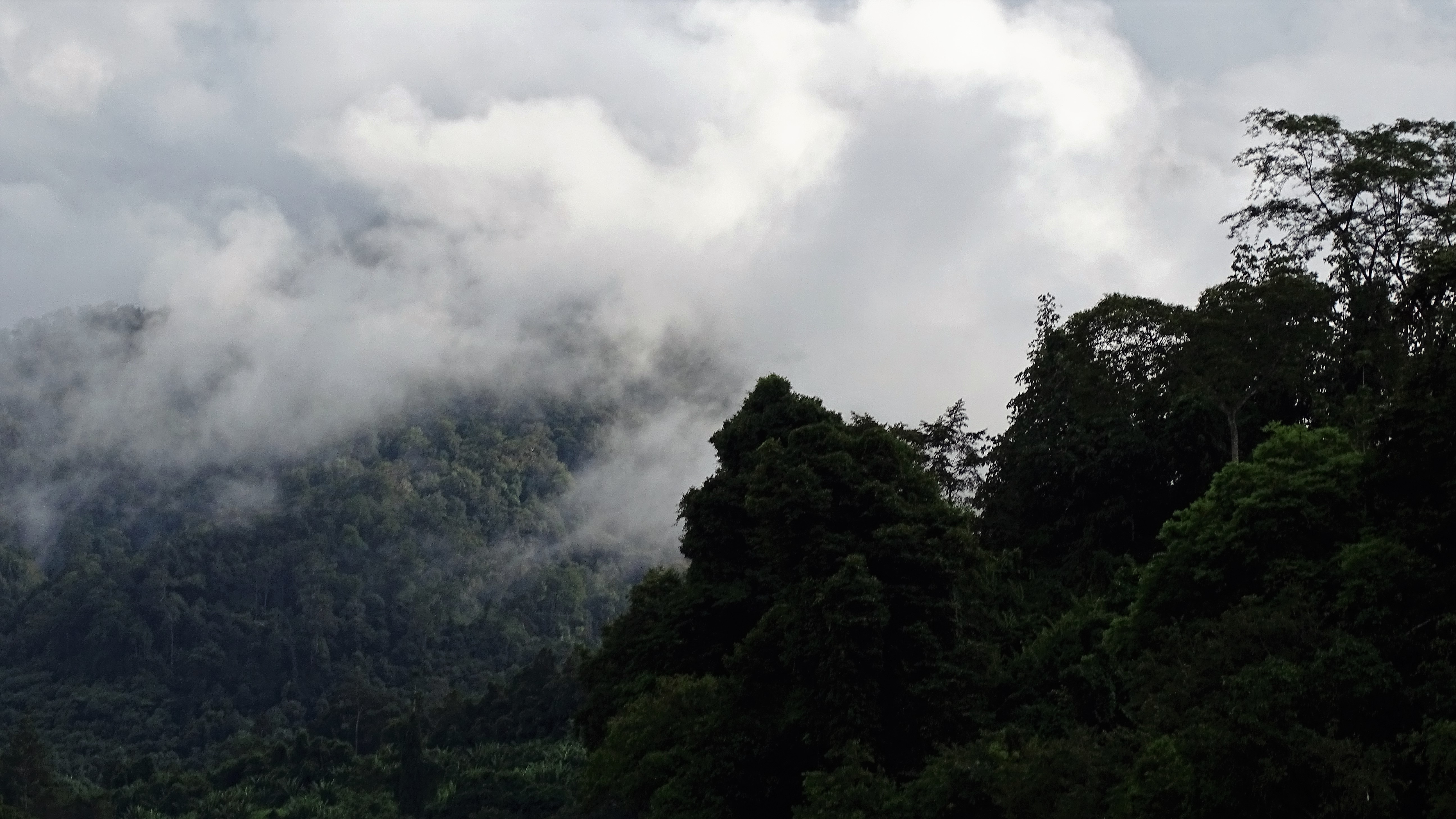
The forests of Kalimantan are sometimes known as the lungs of the world because of their staggering vastness, and these natural landscapes are believed to be among the oldest examples of surviving rainforests on earth, an amazing living and growing piece of earth’s history. It is here that some of the world’s most extraordinary examples of natural beauty are to be found - including a network of astounding meandering rivers and stunning wildernesses that house a unique range of biodiversity in animal and plant life. Yet, this jewel of natural beauty has faced difficulties in the past, as the influence of human hands has at times threatened the forests and waterways of the landThis idea of ecotourism is defined by the International Ecotourism Society as “responsible travel to natural areas that conserves the environment and improves the well-being of local people”. By becoming responsible eco-tourists, we can experience these wonderful and distinct masterpieces of nature, while contributing to a local economy that can work to protect the local environment. If you are tempted to visit the stunning locales of this small piece Asia, you can chose to use tourism as a force for good in order to explore Kalimantan in a way that benefits yourself, the local communities, and their natural landscape.
Kalimantan is a particularly appropriate destination to encourage ecotourism, as not only does it feature unique natural environments, but some of the local Dayak tribes have been interested in environmental matters for many generations, as OurWorld.anu.com states, many of the Dayak “use centuries-old indigenous knowledge to manage their natural landscapes sustainably”. By following their example and visiting these sites with an eye on preserving this ancient beauty, we can help boost a broader consciousness of the need to protect the environment in Kalimantan by showing others precisely how beautiful and irreplaceable the sights of the island can be.
Wildlife at Borneo
Kalimantan has an extraordinary array of wildlife, and of the 222 or so different kinds of mammals found on the island, according to the World Wildlife Foundation, 44 of these “are not found anywhere else in the world”. In fact, much of the island is unexplored and scientists are constantly making fascinating discoveries of new species. In 2013, the rare Sumatran Rhino was caught on film, according to BorneoProject.org “the first time scientists have confirmed the presence of the notoriously shy animal in Kalimantan in over two decades.” Despite sheltering such rare and fascinating creatures, one animal in particular that resides in the forests of Kalimantan has become something of the poster-boy for wildlife on the island – the orangutan.Human of the Forest
It is little wonder that the great ape species of the genus Pongo has attracted so much interest, as the Orangutan Foundation points out they “are remarkably similar to humans in terms of anatomy, physiology, and behavior”. Indeed, Orangutan famously is the Malay word for “person of the forest”, and it hard not to feel a kinship with these remarkable creatures. The orangutan, as an arboreal species of great ape, live almost all of their lives in the branches of the forests of Kalimantan, “spending most of their time in trees, building nests at night, swinging through the trees, and eating in the trees” according to the Center for Great Apes. There are several wild-life preserves in Kalimantan that are working to build up the numbers of the orangutan, such as Camp Leakey in Tanjung Puting National Park. Camp Leakey was established as part of a nature reserve by Dr. Biruté Mary Galdikas, one of the world’s foremost orangutan researchers, who declared in an interview with the Smithsonian that she is proud that “Camp Leakey still looks like a primeval Eden”.
By visiting our tree-dwelling relatives, not only will you be doing your part to support the preservation of the local biodiversity, but you will come face to face with a side of nature few of us have the good fortune to see in this day and age.