
Clim Kalimantan 's Mount Kelam
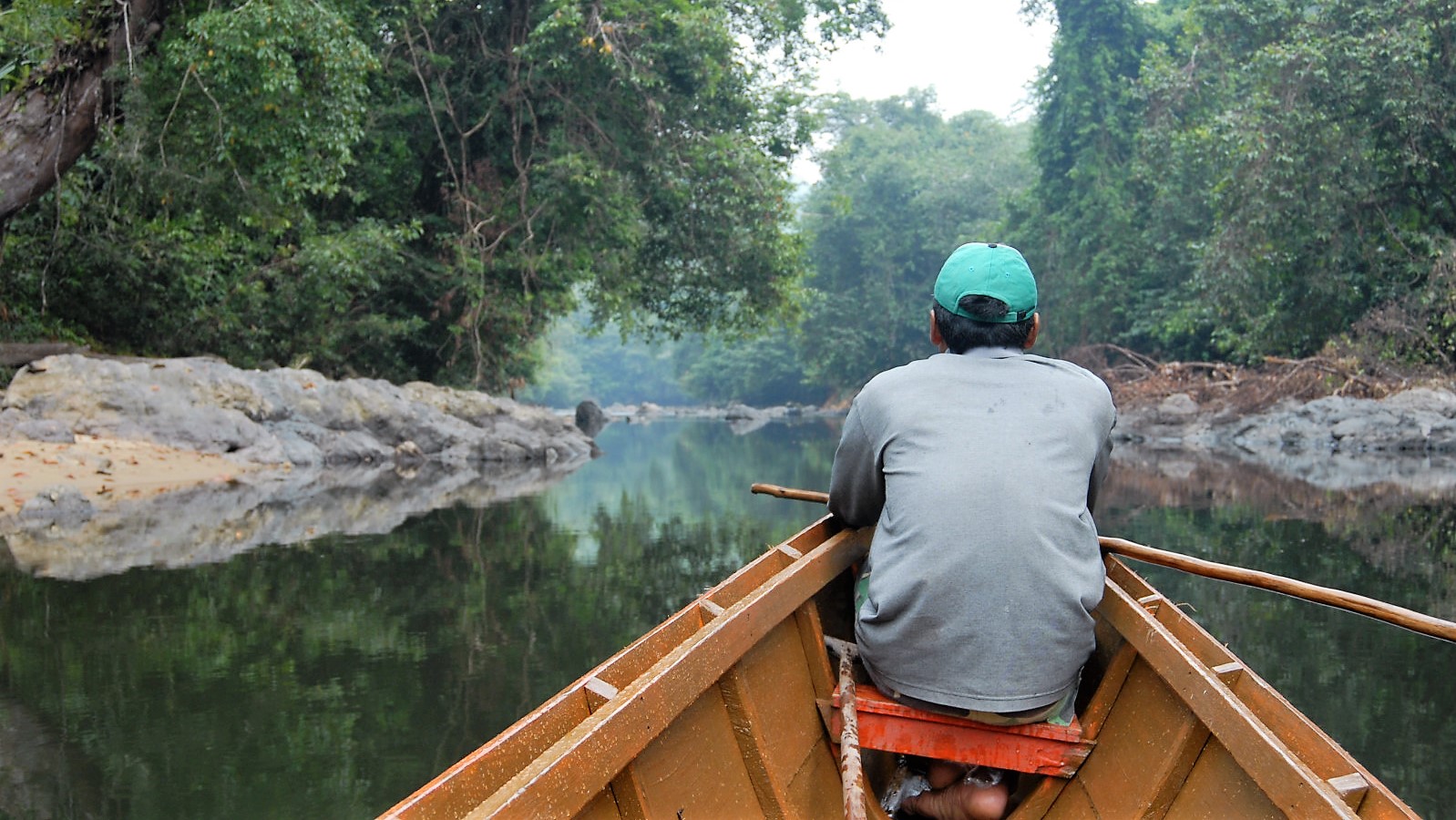
The nature reserves Baning and Kelam Hill are located in the Sintang Regency. While in Kapuas Hulu, there is the Bentuang The Dayak people in the Kelam district of West Kalimantan, still live traditional in their longhouse which lies is in the shadows of Dark Mountain, an eerie, mystical mass of rock deep in the magnificent rainforests of Kalimantan, There are many stories told about the Kelam mountain and the spirits which inhabit the steep forests that cling to its base. In the past, the Dayak tribes would pray to these trees and to the birds that lived in them. Every part of this remote wilderness was sacred, protected for centuries from Malay traders and Dutch and British colonisers by the impenetrable jungle and the ferocious Dayak headhunters.
Now, most of the Dayaks are Catholics, and only the old can remember the "head houses" they built to display the skulls of their enemies. The tribal people of its most remote mountains is out of the "Stone Age". Now live a basic life in wooden cottages a few kilometres down the road on the edge of rubber plantations. Thousands of new settlers came through the years, known as transmigrants, into Kalimantan to work the plantations of rubber, palm oil and timber which have replaced the virgin forest. Most of the settlers are from the islands of Java or Madura and are Muslims with no cultural or ethnic link to the Catholic indigenous people with whom they share the land.
Dayak families have been living together in the one expansive thatch longhouse for as long as anyone can remember. And together they have followed the Dayak laws, unwritten codes which tell them which family has the right to till which fields, which children can marry when they grow up, and what punishments they must suffer for breaches of community laws. In the longhouse, every family is allocated the same amount of private space. The veranda is where the cloth is woven and the rice pounded with heavy wooden poles, the cows and pigs foraging in the earth below, thick shafts of sunlight breaking through the cracks in the thatch.
The locals say headhunting stopped in this area about 1930s. "It was done by young men to prove themselves in the eyes of the girls," They had to look for a head - a man, woman or child - because after you took it, the spirit of the person came to you and gave you courage."