
Welcome
to East
Kalimantan Introduction
The
province of East Kalimantan serves as a gateway to other
destinations on Kalimantan Island. Most destinations, such as the Dayak
settlements in the hinterland along the big rivers, can be reached from
here, moreover, a visit to Kalimantan does not seem complete without a
visit to East Kalimantan.The province of East Kalimantan occupies an
area of 211,440 square kilometres. It is the biggest province of
Indonesia since Irian Jaya has been officially divided into three. It
has a population of more than two million.The forests of East
Kalimantan contain a wealth of rare flora and
fauna. The black Orchid (Clogena pandurata), Nephents Amularia and
Rattan vines growing up to 200 meters long, grow in these forests. So
do various species of valuable tropical hardwoods.
Among
the animal species typical of Kalimantan, living in the forests
are chimpanzees (Pongee pygmaeus), bekantan (Nasalis Larvatus), Mahakam
fresh - water dolphins or pesut (Orcela fluminalis) and many bird
varieties.
The
cultural and artistic traditions of the island's indigenous Dayak
population are still preserved in this region, especially in the
hinterland of East Kalimantan. Sailing up the streams near the
Malaysian border, one can still meet Traditional Dayak settlements than
seem to have been little touched by the advent of modernity.
Samarinda
Samarinda
is the provincial capital of East Kalimantan. Located on the
Mahakam river, the town occupies a space of about 167 square kilometres
and has a population of ....read
more
Balikpapan
The
name Balikpapan is presumably derived from an overloaded ship,
which capsized near Tukung Island.
A Dutch geological map in 1870 contained a small village of.....read
more
Mahakam
River
The
Mahakam river is 920 kilometers long, running over the Muller
Mountain , which forms the boundary between East and West Kalimantan,
Indonesia Kalimantan...read
more
Long
Apari
Long
Afari is a village far into the Mahakam river's upstream reaches.
It can be reached in two hours from a point on the Peangei river. The
people of Long Apari belong....read
more
Tiong
Ohang
Tiong
Ohang is the most important village in the Long Apari district.
The village's population has the past decades considerably swollen to
due to migration of people from.....read
more
Long
Pahangai
Long
Pahangai village is divided into two parts, Long
Pahangai and
Long Pahangai II, each led by its own village head. The two parts are
separated by road running parallel.....read
more
Long
Iram
Long
Iram is more like a small town. A boat service connects the
village with Tenggarong. Small lodgings are available....read
more
Barong
Tongkok
Barong
Tongkok is a nice village and good for spending the night.
Several small waterfalls are found in its surroundings. There are
lodgings, shops, and motorcycles to take.....read
more
Melak
Melak
is a rather busy little town and the capital of a district. It
can be reached from Long Iram in about 30 hours or from Tenggarong by
motorboat. The inhabitants.....read
more
Kersik
Luway Nature Reserve
Kersik
Luway is nature reserve between Melak and Barong Tongkok, 18
kilometers to the south. The "Black Orchid" (Coelogyne pandurata) which
blossoms between....read
more
Tanjung
Isuy
Tanjung
Isuy is a settlement of the Benuaq dayak. There is an original
traditional longhouse in the village which welcomes visitors. Woman can
be seen weaving ulap doyo....read
more
Muara
Muntai & The Big
Lakes
Muara
Muntai is not far from Lake Jempang. It is a convenient stop for
visitors traveling into the hinterland. Lake Melintang covers
a surface of 10,000 hectares near......read
more
Tenggarong
Tenggarong
is 39 kilometers away from Samarinda. It is the capital of
the Kutai regency, and is almost two centuries old. Up to 1960, the
regency was know as the special....read
more
Pesut
Mahakam ( Water dolphin )
If
one is lucky, one might see a pesut Mahakam (orcela fluminalis),
fresh water dolphin, during the trip. The species is also found in the
Mekhong river in Cambodja and...read
more
Bontang
& Kutai Reserve
This 200,000
hectare Kutai National Park, the natural habitat
of rare tropical flora and fauna. Several species of animals exist in
this national park, such as chimpanzees .....read
more
Tanjung
Redep, Tanjung Selor and
Tarakan
Tanjung
Redep, the capital of the Berau regency has a population of
about 50,000, and is reachable from
Samarinda or Balikpapan. There are motorboats from Tanjung....read
more
Derawan
Island
Derawan
Island has to total land surface of 40,000 hectares and is
nature reserve with beautiful scenery and beaches. Several species of
rare flora and fauna are....read
more
Kayan
River
The
Kayan river with its tributaries stretches from the border area
between Indonesia and Malaysia along the Muller mountain range to its
estuary on the south coast of...read
more
|
The Most Spectacular Dayak
Events at Kalimantan. Various rituals and ceremonies are held each
year, from Erau, Tiwah to more local harvest and rain dances
as expressions of gratitude, designed to mark important moments or
cultural Dayak traditions of many years......read
more
____________________________________
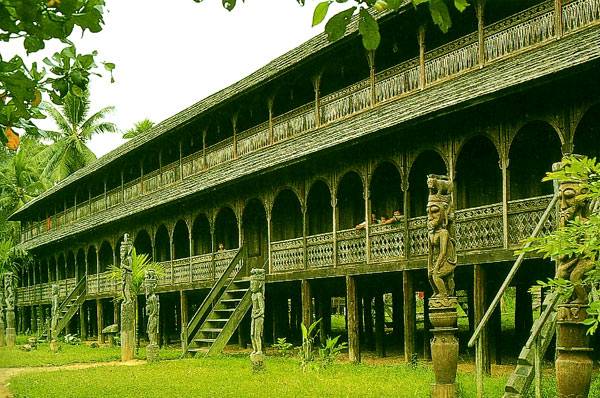
Dayak
Longhouses are
various in art, Differant tribes have differant Longhouses, and can be
found all over Kalimantan island. From The Mahakam River Area, to the
Upper Kapuas River Region.....read
more
___________________________
Kalimantan
Reserves
Kalimantan
National Parks are
various, The Adventures Jungle of Kayan Mentarang, to the soft Kersik
Luway Orchid Reserve. Orangutans
can be found at Tanjung Puting, Wehea,
and Kutai National Park. Derawan Maritime National Park with it's
Manta's and coral reefs
....read
more
____________________________________
The
Dayaks tribes came to Kalimantan as a migration from other
parts in Asia about 3000 years ago.
Dayak
are defined in more then 200 different tribes, the main tribes
are the Bakumpai and Dayak Bukit of South Kalimantan; the Ngajus and
Baritos of Central Kalimantan; the Benuaqs, Kayan, Kenyah, and the
nomadic Punan of East Kalimantan, and the Ibans of West Kalimantan and
Malaysian Borneo.
Traditionally,
Dayak agriculture was based on swidden hill rice cultivation called
"ladang" and "hutan. Dayaks organize their labor in terms
of holding groups which determined who owned rights to land
and how it was to be used. Nowadays, the Dayaks work in the mining
industry, wood industry, and on the plantations of Kalimantan.
....
read more
____________________________________
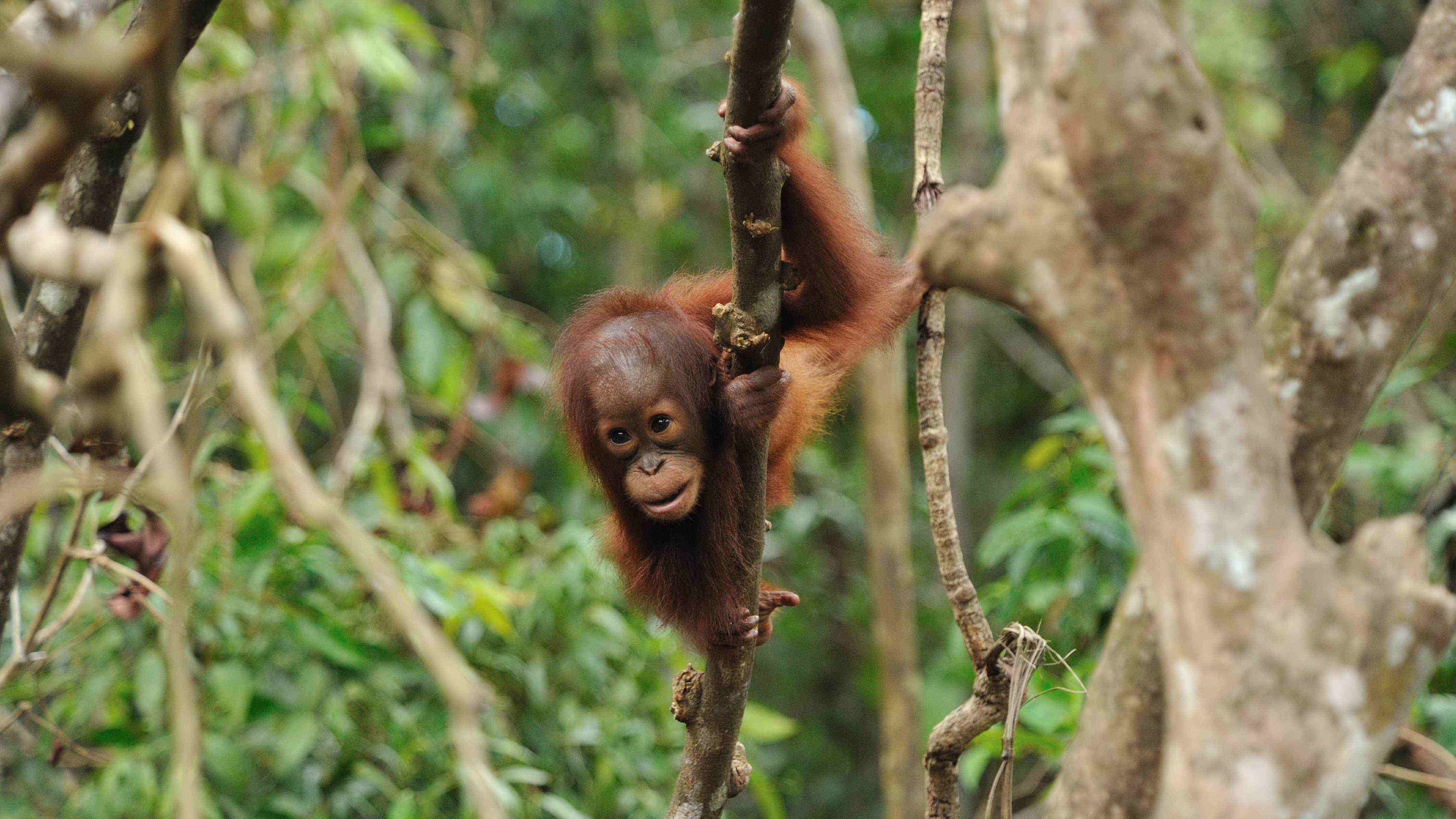
Orang
Utan
Orangutans
are large
apes which can be found at the islands Borneo and
Sumatra. These large apes swing from tree to tree by using their arms (brachiating).
Orangutan in Malay language means "human of the forest". The
Orangutan 's population is
decreasing and is in grave danger of extinction. The Expected
population is less then 40.000 in the world.
Early 2009 a rare subspecies
of the orangutan is found in the area of
Karst East
Kalimantan, this subspecies of Orangutan has black fur as a gorilla. .....read
more
____________________________________
Visit
South Kalimantan
This
region known as the Land of a Thousand Rivers, Big and small rivers,
wide swamps and lowlands are characteristic of this southern province.
Some of those rivers, such as the Barito, Martapura and Negara mark the
boundary.Loksado is an attractive place for nature tourism on a plateau
in the Meratus mountains. The forest offer available trails,and Dayak
Culture....read
more
____________________________________
The indigenous inhabitants are
the Dayaks, comprising the sub-tribes Ngaju, Ot Danum, Ma'anyan Ot
Siang, Lawangan, Katingan and others. Their livelihood is
hunting, moving from one region to another. They adhere to the old
Kaharingan religion. Tanjung Puting and Tangkiling National Park.
.....read
more
____________________________________
Boat and overland journeys
provide a rare opportunity to see the interior of one of the world's
largest and richest island West Kalimantan is an important and very
attractive province. It is rich in history, culture and places of
interest for the tourist. The most important rivers are
the Kapuas River, Sambas River, Sekayam River, Landak River, Melawi
River and Pawan River....read
more
|
|